 English
English
English
 Chinese
English
English
Chinese
Chinese
English
English
Chinese
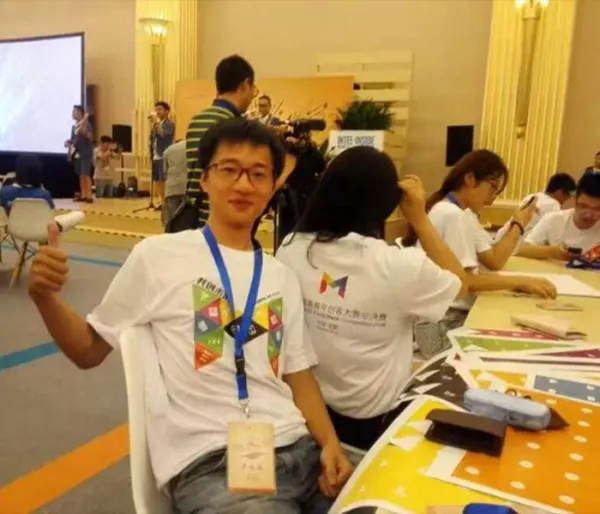
In 2007, Lu Lecheng started an eight-year career at EUPA, focusing on the research and development of blenders and in-vehicle computers. By a lucky chance in 2015, he was invited by a friend to join a R&D team, responsible for cooperating with them on the mechanical part. At that time, Lu Lecheng had no idea that this experience would lay the foundation for him in the field of 3D printing. This cooperative experience not only deepened Lu Lecheng’s understanding of the maker community but also ignited his passion for innovation. Benefiting from the strong national policy support for entrepreneurship at that time, which provided a lot of financial support to the society, as well as the booming maker environment in Xiamen — with more than 40 maker spaces emerging locally. The Maker Space of Xiamen University not only did not charge them platform fees and venue fees but also provided strong financial support of 20,000 yuan. This support prompted Lu Lecheng and other members to participate in the Wall-painting Robot Maker Competition. They unexpectedly won the award with their excellent ideas, which became the first important milestone in their entrepreneurial journey.
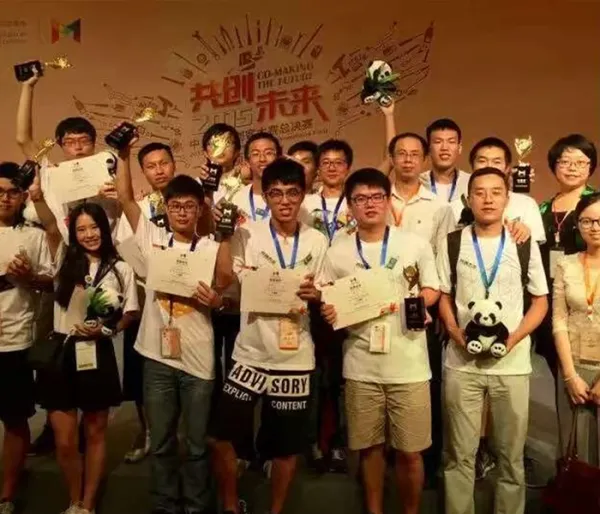
In the diverse ecological environment of the maker space, Lu Lecheng got to know talents in various fields such as electronics, software, and hardware, learning from each other and engaging in creative work together. Endowed with professional knowledge in mechanics, Lu Lecheng recognized the potential of cooperation and conceived the idea of forming a team to complete the production of a whole 3D printer. At that time, no one in China was working on clay 3D printers, while plastic 3D printers were becoming increasingly popular. He believed that innovation was the only way forward, so he resolved to draw on international cases of clay 3D printing equipment to turn his idea into reality.
He organized weekend build sessions, adapted open source motion control for thick clay extrusion, and partnered with local ceramic studios to test materials. Early prototypes produced stable coils that became lamps and vases. These experiments helped seed one of China’s first community pathways toward scalable clay 3D printing technology development.
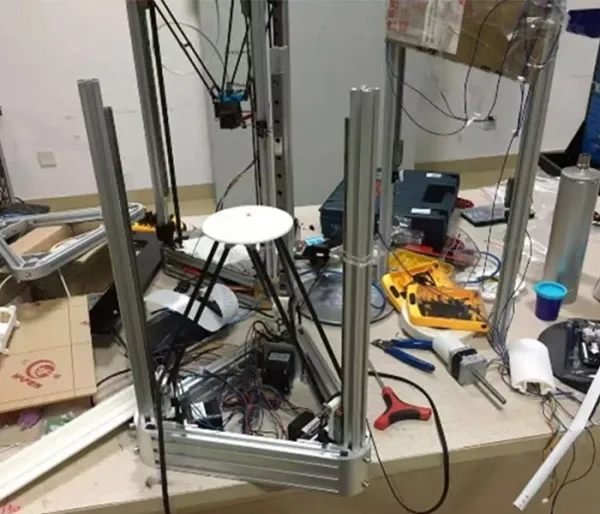
A team was formed in 2016 to research and develop clay 3D printers. The journey forward was full of challenges, with countless attempts and failures. The initial model had precision issues, but through unremitting optimization and adherence to excellent quality, the team gradually improved the technology to meet market demands. In the early stage of entrepreneurship, our customer group mainly consisted of forward-thinking educators who were willing to accept new technologies and provided valuable feedback for the continuous improvement of the products. It was not until 2019 that some ceramic factories finally recognized the value of our 3D printing solutions and began to order clay 3D printing equipment for production. Subsequent sales gradually increased and stabilized.
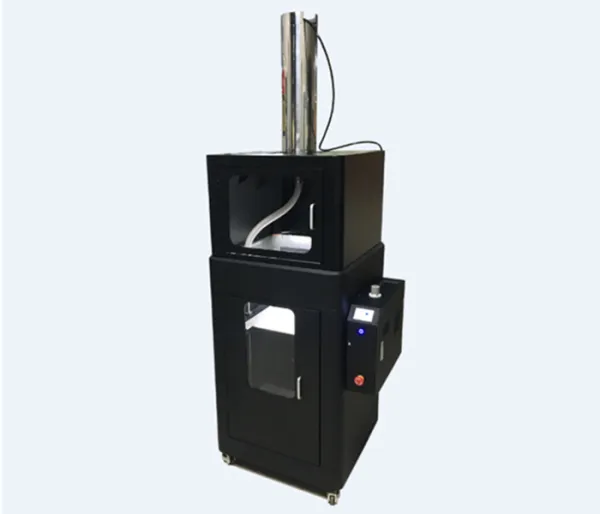
As “Made in China” gains global trust, we are bringing cutting-edge 3D printers to the international market. This will not only allow us to gather more user feedback to facilitate technological iteration and upgrading, but also the stringent standards of the global market will drive us to break through technological boundaries. In the future, we will continue to integrate cutting-edge artificial intelligence technologies. We aim not only to push the precision and efficiency of machines to new heights, but also to explore the boundless possibilities of intelligent manufacturing, enabling innovative technologies to empower every creative inspiration around the world.
Be in Touch with Us