Chinese
World’s First 3D-Printed Secondary Revetment Debuts in Jiangsu
-A 430-Meter Innovation Transforms Waterway Protection with Multiple Advantages
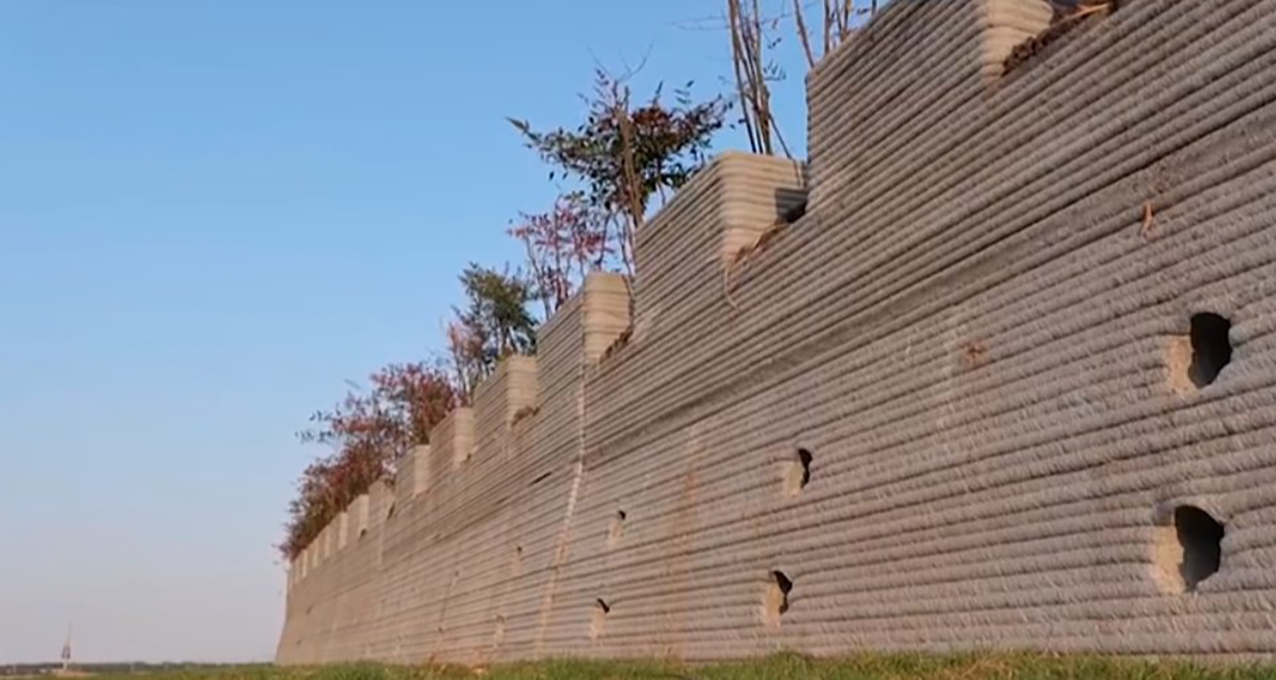
Recently, the world’s first 3D-printed secondary revetment, stretching 430 meters, was successfully installed along the Wujiang Tuncun section of Jiangsu’s Sushen Outer Port Line. This pioneering structure is a key part of the inland waterway regulation project, marking the first application of 3D printing technology in building secondary revetments for waterway protection in China.
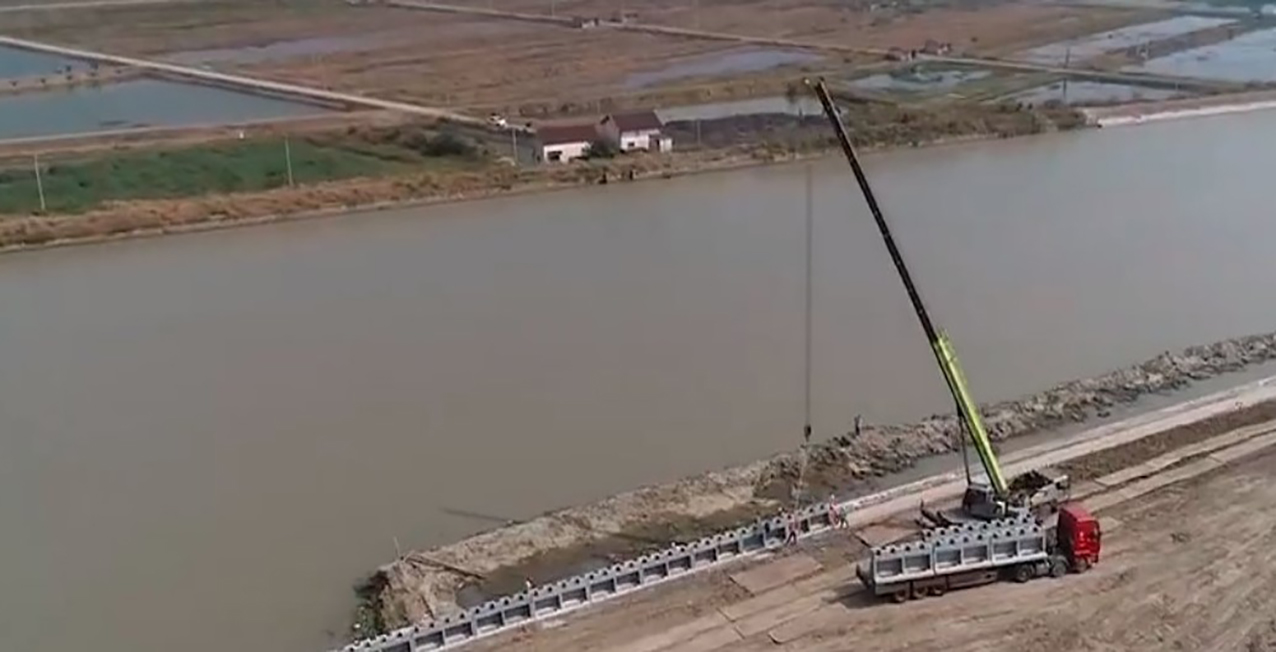
Compared with traditional cast-in-place or precast concrete revetment techniques, this 3D-printed solution brings remarkable improvements. It combines automated workshop printing with on-site assembly: foundation work and component printing progress simultaneously, skipping tedious steps like formwork installation and concrete curing. This not only lowers construction difficulty and shortens the schedule but also cuts costs significantly — labor costs are reduced by 40% without the need for formwork handling, and solid waste disposal costs drop by about 60 yuan per cubic meter. Environmentally, its raw materials include a large amount of construction and industrial solid waste, achieving resource recycling and minimizing construction dust and noise. Besides, 3D modeling enables smooth, customized lines, and the revetment is designed with green planting boxes on top, which will blend perfectly with the surrounding ecosystem after vegetation is planted. However, the innovative technology still faces practical challenges. The surface of the printed components is rougher than traditional ones, making them vulnerable to pollution and efflorescence after long-term exposure to the elements, requiring targeted maintenance solutions to be refined through long-term use. Additionally, it remains to be verified through prolonged observation whether local foundation settlement in the waterway area will damage the structural integrity of the sectionally assembled revetment. Enhancing the components’ durability against constant moisture and water erosion also remains a key task for the industry.
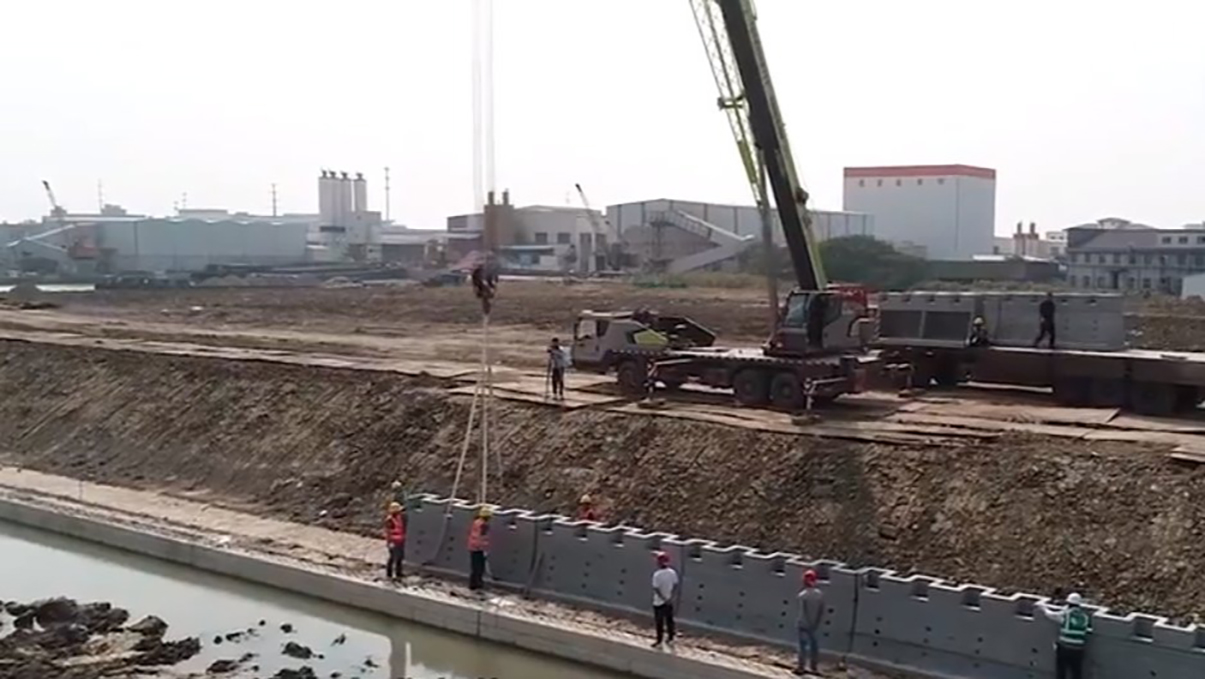
Notably, this project has promoted Jiangsu Province to issue the Quality Inspection Standards for 3D-Printed Revetment and Noise Barrier Projects in Transportation Engineering, laying a foundation for standardized promotion of the technology. Following its success, projects such as the Suzhou Ruanjiabang Sluice Reconstruction have adopted 3D-printed revetments, proving its great application potential. With optimized material formulas, improved maintenance technologies and improved standards, 3D concrete printing is expected to be widely used in more waterway and water conservancy revetment projects, leading a greener and smarter transformation in waterway protection engineering.