English
English
English
 Chinese
English
English
Chinese
Chinese
English
English
Chinese
Step 1: Submit your customization requirements via the official website customer service or email channel.
Step 2: After communication between both parties, we will provide a customization plan, quotation, and delivery timeline. Upon confirmation, an electronic contract will be signed and a deposit (usually 50% of the total amount) will be paid.
Step 3: Once production is completed according to the plan, machine performance testing will be conducted. After passing the test, the customer will pay the balance, and we will ship and deliver the machine within the agreed timeframe.
For more real application cases and customer projects, please visit our Case Study page.
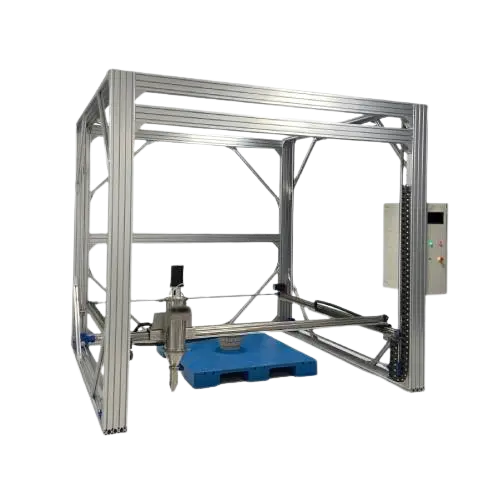
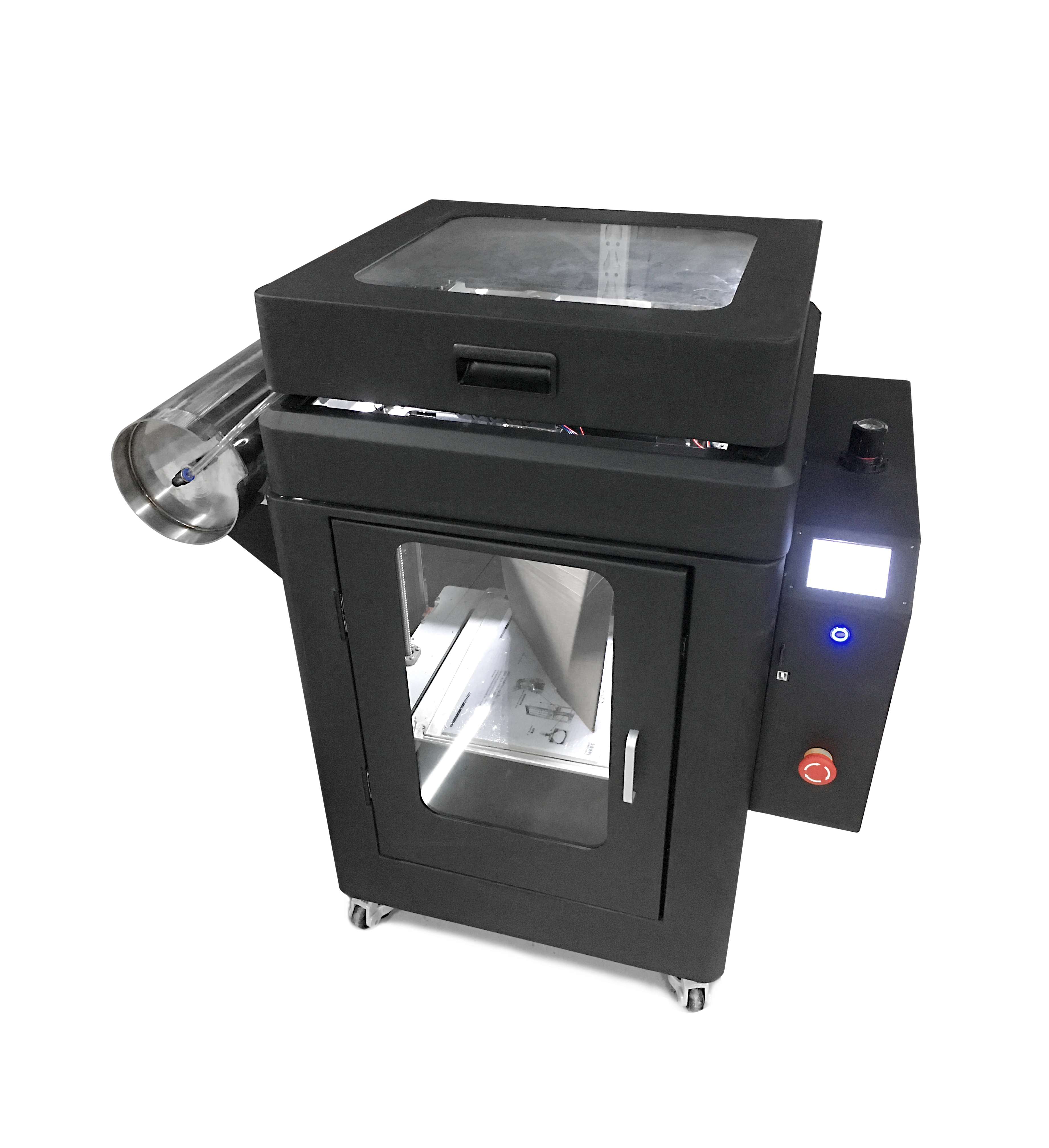
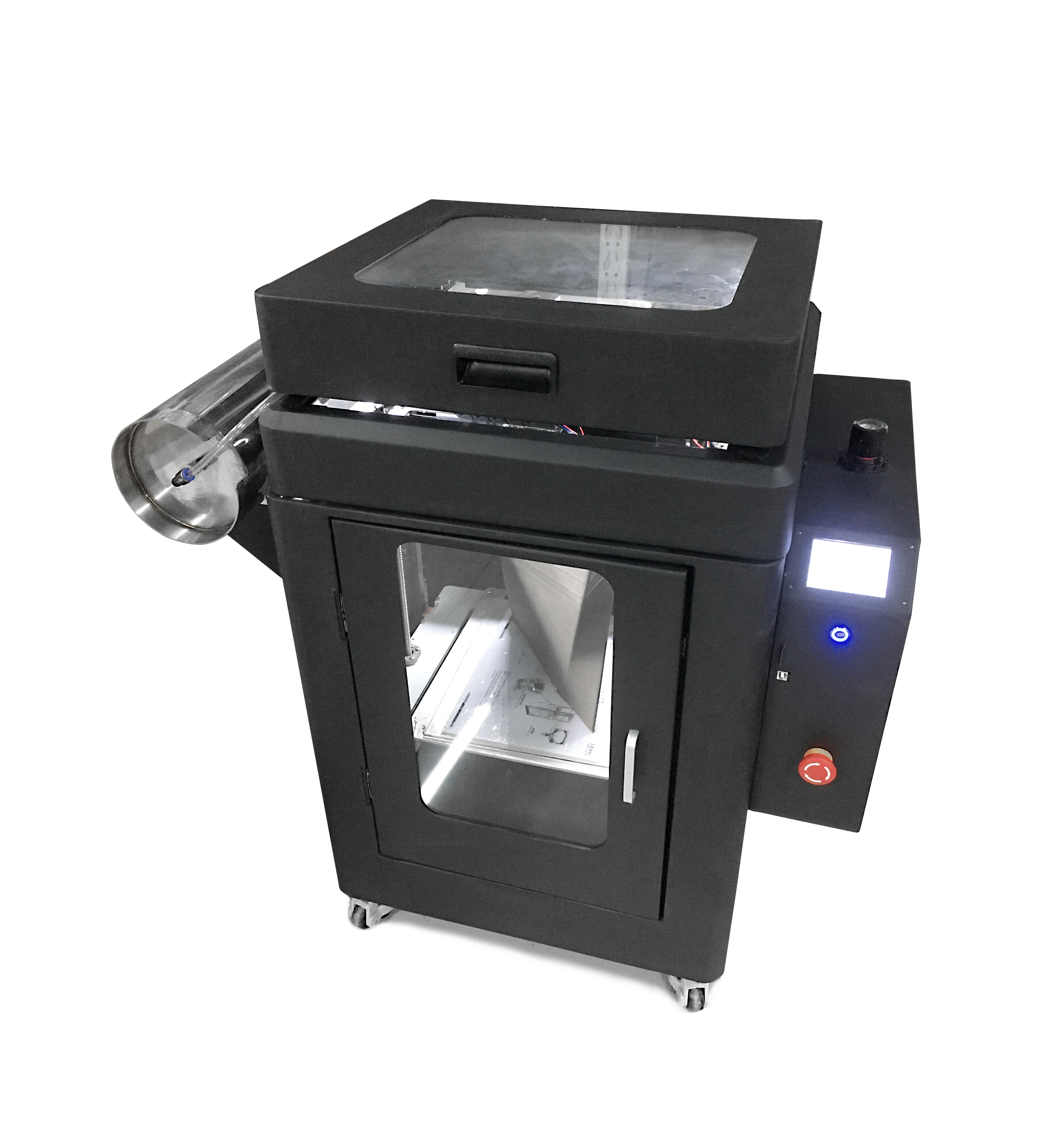
Overall Dimensions: 650mm (W) × 700mm (D) × 1200mm (H) Space-efficient design, ideal for laboratory and workshop environments
Build Volume: 400mm (W) × 400mm (D) × 600mm (H) Compact design, ideal for laboratory research without taking up space.
Nozzle Diameter: 8.0mm / 10.0mm Adaptable to fine-detail printing or high-speed deposition in material R&D
Layer Thickness: 0.5–4.0mm (adjustable) Supports precision testing of layer adhesion in new concrete formulas
Printing Speed: 0–200mm/s (variable) Flexible for testing material flow behavior at different deposition rates
Compatible Materials: Concrete, geopolymers, and other soft-build materials
Extruder Capacity: ≥1L Adequate volume for continuous printing of small to medium batches
Material Loading: Manual feeding Flexible for lab-scale material research, allowing easy testing of new formulas
Screw Structure: 3D curved surface screw (non-sheet welded) Ensures smooth material flow, reducing clogging during frequent formula adjustments in lab testing
Material Flow: First-in-first-out material path Prevents material stagnation and clogging, ensuring consistent extrusion
Mechanical Structure: Platform lifting structure Ergonomic for easy material loading and maintenance access
Z-Axis Control: Single-motor linkage control Simplified drive system for easy maintenance and reduced downtime
Heating & Insulation: Enclosure-integrated heating (not single heating platform) with automatic constant temperature control Stable ambient temperature inside the chamber prevents material cooling issues, suitable for temperature-sensitive formulas
File Extension: STL, OBJ
Operating Systems: Window series / Mac OS / Linux
Slicing Software: cura / S3D (Compatible with third-party software)
Power Supply: AC 100–240V, 360W
Qualification Certification: The whole machine has passed the joint quality inspection of CNAS and CMA, as well as CE and ROHS certifications. Proof documents can be provided.
R&D-friendly operation: Manual feeding (suited for small-batch formula tests) with a lifting platform for easy loading; 3D curved screws (non-sheet welded) ensure clog-free, "first-in-first-out" material flow, paired with a 1L+ extruder for flexible trials.
Controlled environment: In-cabinet heating/insulation (not just a heated platform) with automatic temperature control, stabilizing material viscosity—vital for testing concrete, geopolymers, etc.
Safety & maintenance: Front red emergency stop switch; Z-axis controlled by a single motor for easy upkeep.
A: Compared to industrial models:
Industrial machines prioritize mass production (automated feeding, high-speed output), while ZCC4060H focuses on R&D flexibility (adapting to diverse materials, precise extrusion for formula validation).
It balances speed (0–200 mm/s) and adjustable layer thickness (0.5–4.0 mm) to meet lab data accuracy needs, unlike industrial models focused on production efficiency.
Be in Touch with Us