 English
English
English
 Chinese
English
English
Chinese
Chinese
English
English
Chinese
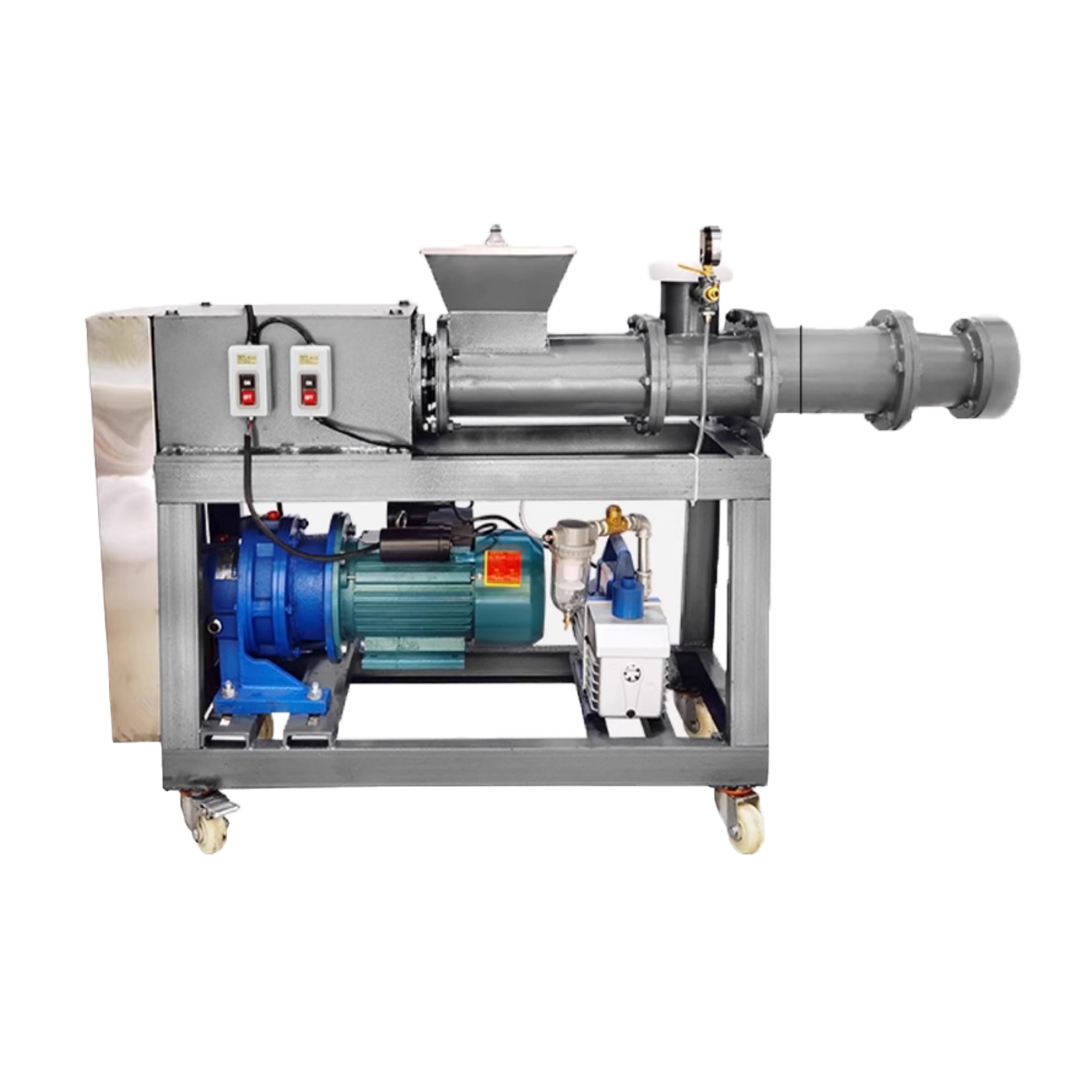
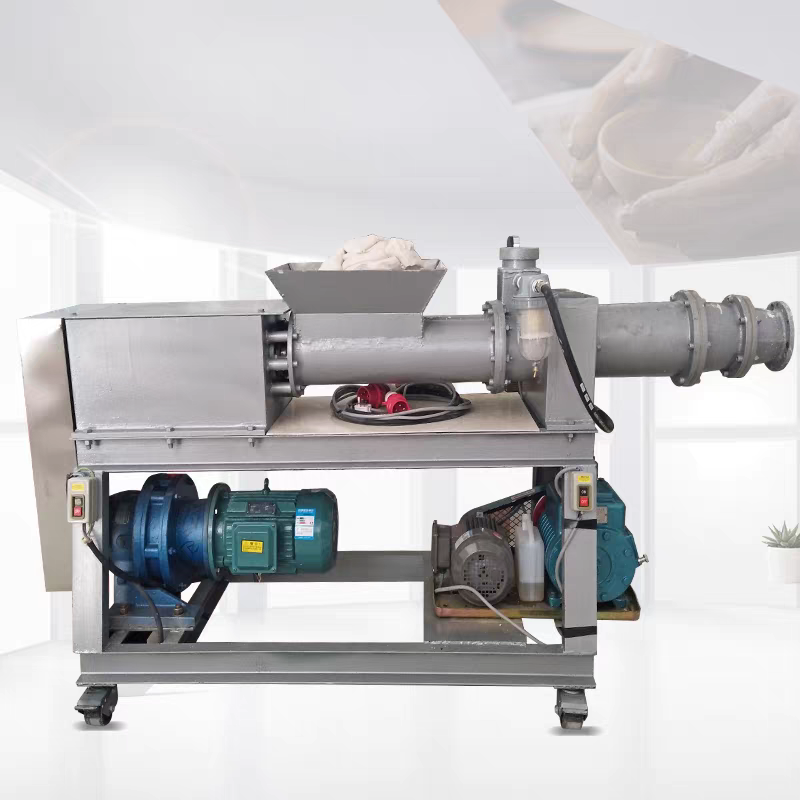
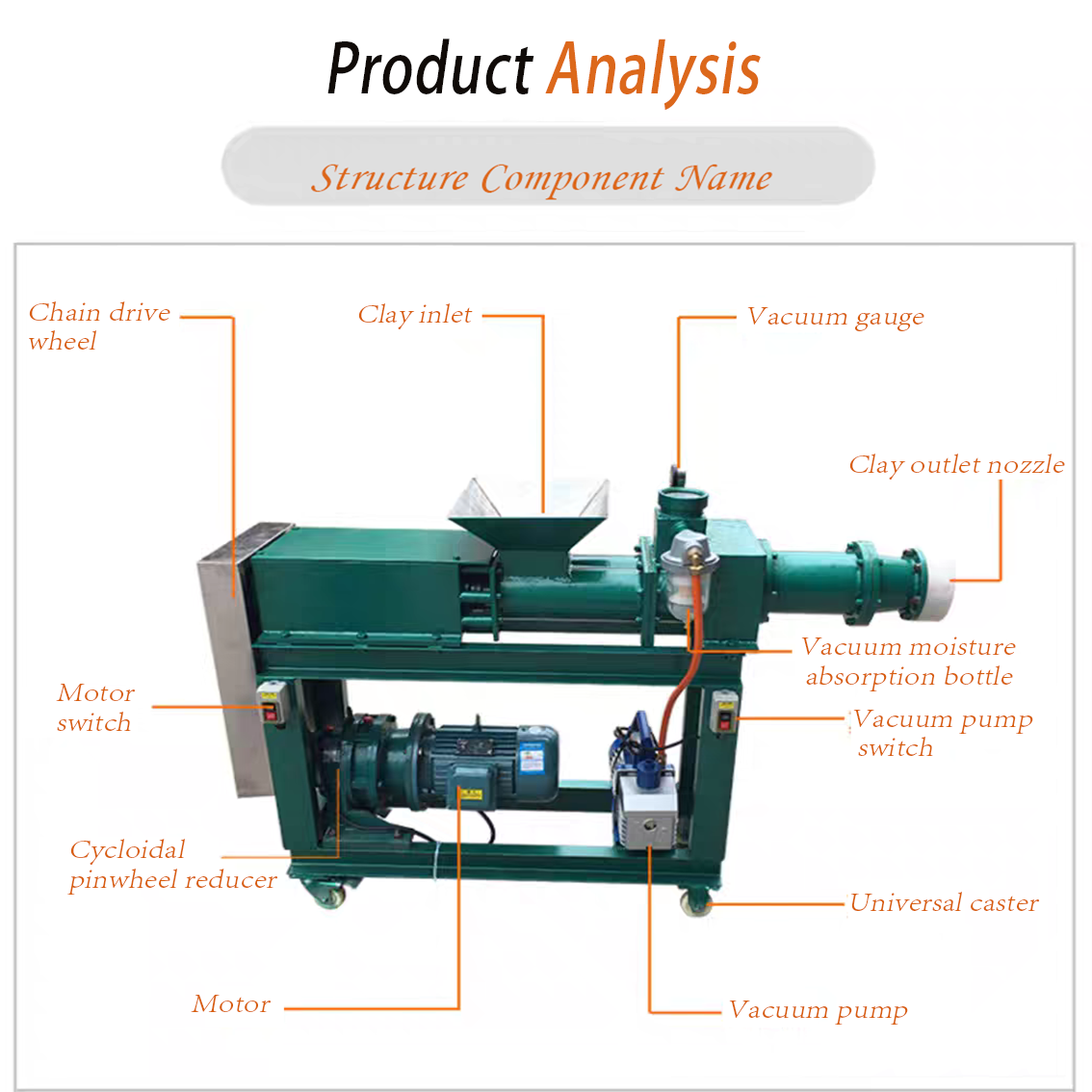
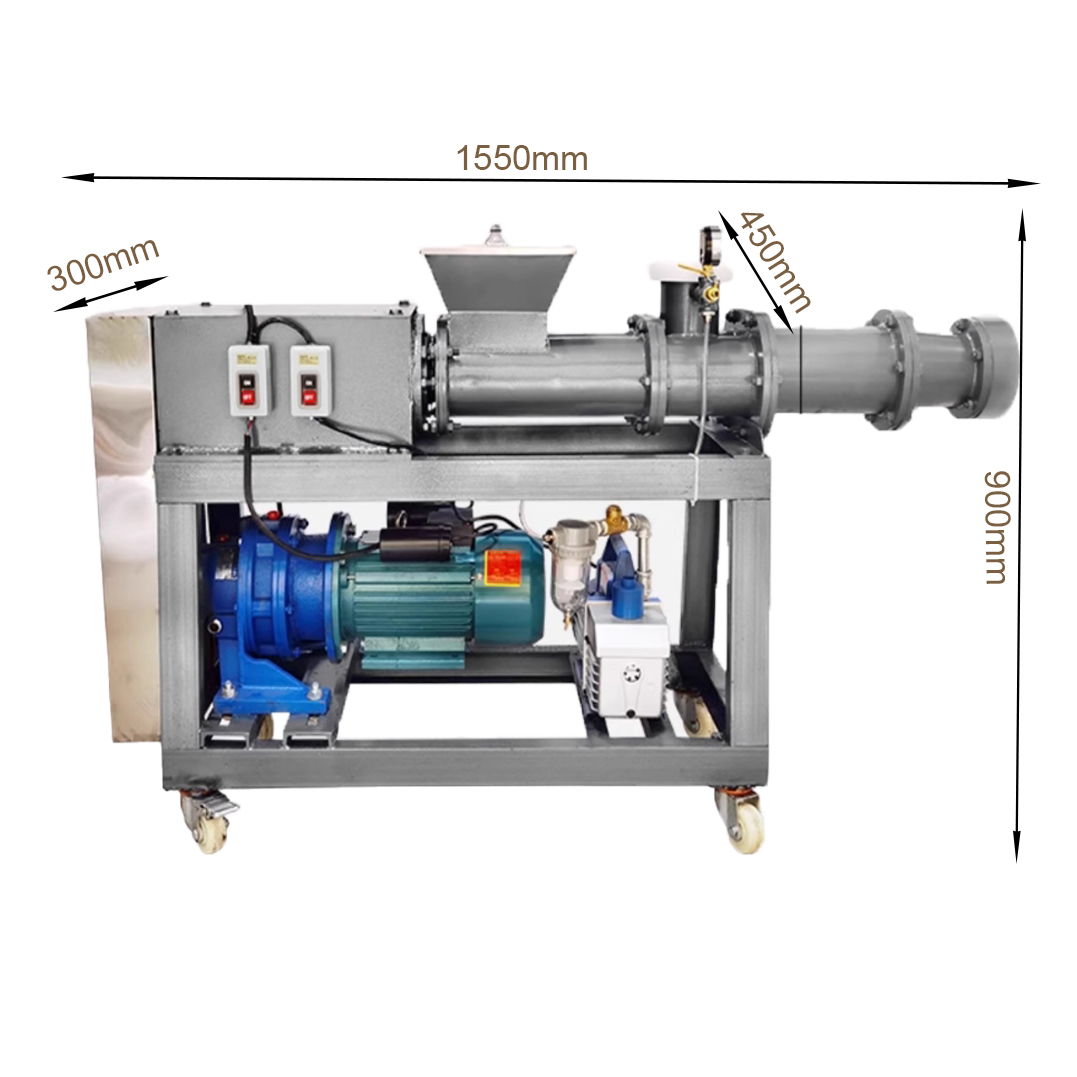
| Type | Dual-shaft horizontal |
|---|---|
| Mud output | 500-800 kg/hour |
| Mud output diameter | φ100mm |
| Spindle speed | 42 rpm/min |
| Motor | 2.2 KW |
| Vacuum degree | 0.68-0.96 |
| Vacuum pump model | 2X-4 rotary vane type |
| Vacuum pump power | 0.55 Kw |
| Operating voltage | 220V/380V |
| Mud loading (clay for 3D printer barrel) | Equipped with automatic clay loading function |
| Overall dimensions | 1580×500×900 mm |
| Weight | 250 kg |


Note: All parts of the main machine are mounted on a base, ensuring easy installation and transportation.Before the test run, fill the gearbox and all lubrication points with appropriate lubricating oil. After installation and adjustment, the machine must undergo an idle test run for 20-30 minutes. During the idle run, confirm the following: No abnormal noise, overheating, or vibration in any part; Correct rotation direction of all moving components. Only after passing the idle test run can the machine be put into loaded operation.


Knead and press to eliminate air bubbles, sand particles and other impurities in clay, making the clay uniform and fine. This prevents nozzle clogging and finished product cracking caused by uneven raw materials during printing.
Precisely control clay moisture content (usually 20%-25%), ensuring the clay is "easy to extrude without deformation"—adapting to the extrusion pressure of 3D printer nozzles and guaranteeing firm interlayer bonding of printed parts.
Link with the 3D printer’s feeding system to continuously supply clay (strip or block shape), avoiding feeding interruptions from manual refueling. It ensures the continuity of long-cycle printing (e.g., large ceramic artworks) and reduces printing defects.
Please note the following operations
Be in Touch with Us